Introduction: A Gateway Into South Africa’s Skilled Artisan Industry
The demand for skilled artisans in South Africa continues to grow as industries increasingly rely on technically trained professionals to maintain and operate complex machinery. Against this backdrop, the Premier Millwright Apprenticeship 2026 presents a valuable opportunity for young, technically minded individuals who want to build a long-term career in mechanical and electrical engineering environments.
Offered within the Technical Milling division of Premier FMCG, this three-year structured programme blends classroom-based theoretical learning with hands-on workplace training. It is designed to develop well-rounded millwright artisans capable of working in fast-paced FMCG production environments.
For candidates who enjoy problem-solving, working with tools, and understanding how machines function, this apprenticeship offers a practical entry point into a stable and high-demand technical career path.
What Is the Premier Millwright Apprenticeship 2026?
The Premier Millwright Apprenticeship is a structured artisan development programme aimed at training learners in both mechanical and electrical maintenance disciplines. It is based at the Premier Cape Town Mill, where apprentices are immersed in real production environments.
The programme runs over a period of three years and follows a dual-training approach:
- Theoretical training at an accredited training institution
- Practical on-the-job training within a live FMCG milling facility
This combination ensures that apprentices do not only learn technical theory but also gain direct exposure to industrial equipment, production systems, and maintenance operations.
Unlike classroom-only programmes, this apprenticeship is highly practical and designed for individuals who learn best through real-world experience.
Training Structure: Blending Theory With Real Industry Experience
A key strength of this apprenticeship lies in its structured training model. Each apprentice progresses through both academic and workplace learning phases that build technical competence step by step.
1. Theoretical Learning Component
Apprentices attend accredited learning centres where they study subjects related to:
- Engineering Mathematics
- Engineering Science
- Electrical principles
- Mechanical principles
- Technical drawings and schematics
This academic foundation is essential for understanding how industrial systems operate.
2. Workplace Training
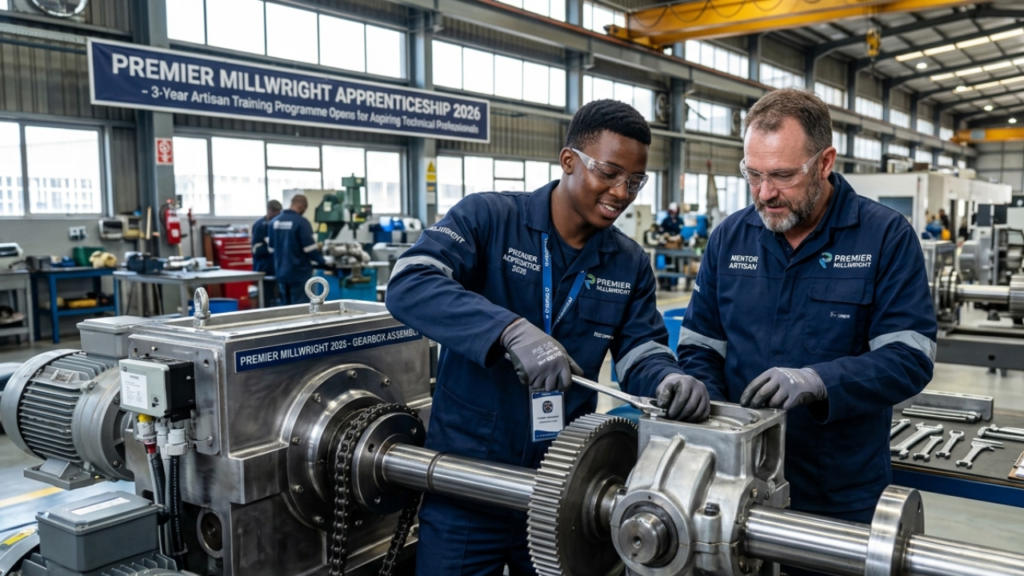
In the milling environment, apprentices are exposed to real machinery and operational systems. Under the supervision of qualified artisans, they gain experience in:
- Mechanical maintenance and repairs
- Electrical fault finding
- Equipment inspection and servicing
- Production support tasks
- Safety procedures in industrial environments
3. Mentorship From Qualified Artisans
A critical element of the programme is mentorship. Apprentices work closely with experienced millwrights who guide them through complex tasks, ensuring they build both confidence and competence.
What Will Apprentices Do on a Daily Basis?
The role of a millwright apprentice is highly practical and hands-on. Candidates should expect to be actively involved in production and maintenance tasks.
Typical responsibilities include:
- Assisting with machine maintenance and repairs
- Supporting electrical and mechanical fault diagnosis
- Working with industrial milling equipment
- Participating in planned maintenance activities
- Learning to interpret technical drawings
- Working in shift-based environments
- Occasionally working weekends or public holidays when required
This is not a desk-based training programme. It requires physical involvement, attention to detail, and the ability to follow safety protocols in an industrial environment.
Who Should Apply for the Apprenticeship?
The Premier Millwright Apprenticeship is best suited for individuals who are:
- Interested in mechanical and electrical systems
- Comfortable working with tools and machinery
- Curious about how industrial equipment operates
- Willing to learn in a structured and disciplined environment
- Able to work in teams and follow instructions
- Motivated by long-term technical career growth
Ideal candidates are those who enjoy practical problem-solving and are eager to develop technical trade skills in a professional environment.
Minimum Requirements and Qualifications
To be considered for the programme, applicants must meet specific educational requirements.
Essential Requirement:
- N2 qualification with four relevant trade subjects
Relevant N2 Subjects Include:
- Engineering Mathematics
- Engineering Science
- Electrical Trade Theory (advantageous)
- Mechanical Trade Theory
- Engineering Drawings (Mechanical or Electrical)
Advantageous Qualification:
- N3 qualification
- Matric (Grade 12) certificate
While experience is not mandatory, it can strengthen an application significantly.
Is Work Experience Required?
This is an apprenticeship, meaning it is designed for entry-level candidates. However, any relevant exposure can improve an applicant’s chances.
Helpful experience may include:
- Workshop or technical college training
- School-based engineering projects
- Basic mechanical or electrical repairs
- Assisting in maintenance work
- Exposure to tools and machines in any capacity
Even small experiences can demonstrate initiative and interest in the trade.
Key Skills and Personal Attributes
Successful candidates typically demonstrate a combination of technical aptitude and personal discipline.
Important Skills Include:
- Problem-solving ability
- Strong communication skills
- Teamwork and collaboration
- Logical thinking
- Attention to detail
- Manual dexterity and coordination
- Willingness to learn continuously
Employers look for candidates who can stay focused in technical environments and adapt quickly to new challenges.
Working Conditions and Expectations
Apprentices must be prepared for a demanding but rewarding working environment.
Key conditions include:
- Standard five-day work week with possible overtime
- Shift-based work depending on production requirements
- Exposure to industrial machinery and production environments
- Strict adherence to safety protocols
- Balanced commitment to both theoretical and practical training
This programme requires discipline, time management, and resilience, especially when balancing study and workplace responsibilities.
Why the Millwright Apprenticeship Matters
Millwrights play a critical role in keeping industrial operations running smoothly. In FMCG environments, machinery downtime can significantly impact production efficiency.
Through this apprenticeship, learners gain exposure to:
- Mechanical systems and industrial equipment
- Electrical maintenance and troubleshooting
- Fault diagnosis and repair techniques
- Production line support systems
- Safety-focused engineering practices
This structured training builds strong foundational skills that can lead to long-term employment in industries such as manufacturing, food processing, mining, and engineering services.
It also provides apprentices with practical confidence—something that cannot be gained through theory alone.
How to Build a Strong CV for This Apprenticeship
A well-prepared CV can significantly increase your chances of selection. Applicants should ensure their CV is clear, structured, and focused on technical skills.
Your CV Should Include:
- N2 qualification details and subjects
- Matric certificate (if applicable)
- Technical or workshop exposure
- Any electrical or mechanical training
- Practical school or college projects
- Problem-solving examples
- Updated contact details
Strong CV Tips:
Instead of listing generic skills, provide real examples such as:
- “Assisted in basic machine maintenance during training”
- “Used engineering drawings in practical assignments”
- “Participated in workshop-based mechanical projects”
- “Applied engineering science concepts in hands-on tasks”
Recruiters want evidence of practical ability, not just theoretical knowledge.
Common Mistakes to Avoid When Applying
Many applicants lose opportunities due to avoidable errors. Avoid the following:
- Submitting a generic CV without technical detail
- Omitting N2 subject breakdown
- Failing to highlight workshop experience
- Ignoring electrical or mechanical exposure
- Using outdated contact information
- Missing the application deadline
- Submitting incomplete documents
A focused and tailored CV makes a significant difference.
Application Deadline and Submission Details
The closing date for applications is:
29 May 2026
Applicants are strongly encouraged to apply early to avoid last-minute issues or system delays.
Applications must be submitted through the official application channel provided by the employer. Candidates should ensure all supporting documents are complete and clearly presented before submission.
Frequently Asked Questions (FAQ)
1. What is the Premier Millwright Apprenticeship?
It is a three-year structured artisan training programme combining theoretical studies and practical workplace experience in mechanical and electrical maintenance.
2. Do I need experience to apply?
No. This is an entry-level apprenticeship, but any technical exposure or workshop experience will strengthen your application.
3. What qualification do I need?
You need an N2 qualification with four relevant trade subjects. N3 and Matric are advantageous.
4. Where is the programme based?
The apprenticeship is based at the Premier Cape Town Mill under Premier FMCG.
5. What kind of work will I do?
You will assist with machine maintenance, electrical fault finding, mechanical repairs, and production support tasks.
6. Is the programme full-time?
Yes, it is a full-time apprenticeship involving both classroom learning and workplace training.
7. When is the closing date?
Applications close on 29 May 2026.
Conclusion: A Strong Start for Future Artisan Careers
The Premier Millwright Apprenticeship 2026 offers a structured and practical pathway into one of the most important technical trades in South Africa. For motivated young individuals with a passion for mechanical systems and engineering, this programme provides the ideal foundation for long-term career development.
By combining accredited theoretical learning with real industrial exposure, the apprenticeship equips candidates with the skills needed to succeed in demanding FMCG environments. Those who are disciplined, curious, and willing to learn stand to benefit the most from this opportunity.
With the application deadline approaching, prospective candidates are encouraged to prepare their documents early and ensure their CV clearly demonstrates technical capability and readiness for artisan training.
Professional Disclaimer
This article is a rewritten and editorially enhanced version of publicly available apprenticeship information. It is intended for informational and educational purposes only. Applicants should always verify all requirements, deadlines, and application procedures through the official employer or authorized recruitment channels before applying.

Thato Sabethwa is a passionate education advocate and digital content creator dedicated to helping young South Africans access valuable career and learning opportunities. With a strong belief in the power of skills development, Thato writes informative articles about learnerships, internships, bursaries, and job readiness. Through OnlineLearnership.co.za, Thato aims to guide students and job seekers toward the right opportunities that can shape their future. Her content focuses on practical advice, career tips, and reliable updates to empower readers to make informed decisions about their education and career paths.