Introduction: A Gateway Into South Africa’s High-Demand Artisan Careers
South Africa’s agricultural and construction sectors continue to rely heavily on skilled artisans who can maintain and repair complex machinery. However, the country is still experiencing a shortage of qualified technicians in fields such as tractor mechanics and earthmoving equipment maintenance. AFGRI Artisan Training Programme 2026
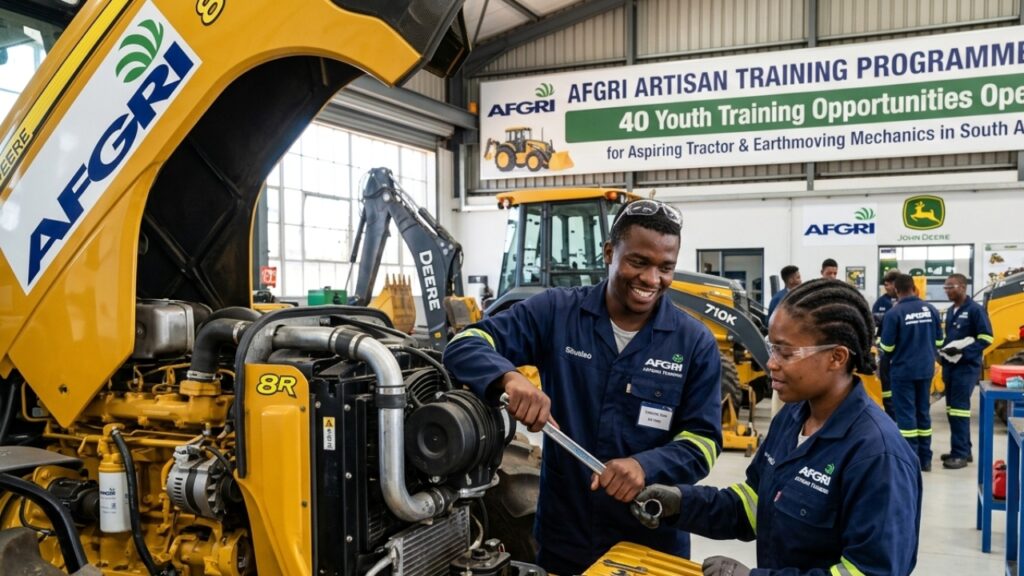
To address this skills gap, AFGRI Equipment has announced its Artisan Training Programme 2026, offering 40 structured training opportunities for unemployed youth.
This initiative is more than just a learnership—it is a full technical development pathway that combines hands-on workplace experience, formal theoretical learning, and accredited trade certification. For young South Africans with a passion for mechanics and engineering, this programme presents a rare opportunity to enter a stable and respected profession without requiring a university degree.
Overview of the AFGRI Artisan Training Programme 2026
The programme is designed to develop qualified artisans over a structured three-year period, with a possible extension depending on performance and training progress.
Key Programme Details
- Programme Name: AFGRI Artisan Training Programme 2026
- Reference Number: AO-2345
- Number of Positions: 40
- Duration: 3 years (maximum 4 years depending on progress)
- Closing Date: 30 September 2026
- Training Fields:
- Tractor Mechanic
- Earthmoving Equipment Mechanic
Related Opportunities 2026
• Funding Bursaries
• Youth Opportunities
• Internship Programme
• Learnership Programme
• Online Courses
Training Authorities
The programme is accredited and supported by South Africa’s key sector education and training authorities:
- AgriSETA
- MerSETA
These bodies ensure that training meets national standards and leads to recognised trade qualifications.
Why This Artisan Training Programme Matters
South Africa faces a growing demand for skilled technical workers, particularly in agriculture and construction. Modern machinery used in these sectors requires specialised maintenance knowledge that cannot be replaced by automation alone.
The AFGRI Artisan Training Programme plays a critical role in:
- Reducing the national artisan shortage
- Creating employment pathways for youth
- Strengthening agricultural productivity
- Supporting infrastructure development
- Providing accredited technical qualifications
For many young people, this programme represents a practical alternative to university education, offering real-world skills and long-term employability.
Structure of the 3-Year Artisan Training Programme
The training is designed to gradually develop both theoretical knowledge and practical skills. It follows a structured apprenticeship model that blends workplace experience with formal technical education.
1. Workplace-Based Learning
Participants will gain hands-on experience in real workshop environments, including:
- Equipment diagnostics and fault identification
- Routine servicing and maintenance
- Repair of agricultural and earthmoving machinery
- Workshop safety procedures
- Use of specialised tools and machinery
2. Formal Training Components
In addition to workplace learning, apprentices will attend structured training sessions that may include:
- Institutional training programmes
- Distance learning modules
- Supplier-led technical workshops
- Internal AFGRI training sessions
- Saturday classes (where required)
3. Mentorship and Progress Tracking
Each apprentice is supported through:
- Experienced technical mentors
- Regular performance assessments
- Skills development tracking
- Structured learning milestones
This ensures continuous growth and alignment with trade qualification requirements.
Understanding the 6-Month Probation Period
The first six months of the programme serve as a probationary phase. This period is essential for evaluating suitability from both the employer and the trainee perspective.
During Probation, AFGRI Assesses:
- Work ethic and discipline
- Technical aptitude
- Teamwork ability
- Attitude and reliability
Apprentices Evaluate:
- Workshop environment suitability
- Career interest alignment
- Learning expectations
This phase allows either party to exit the programme without penalties if expectations are not met.
Skills You Will Gain During Training
The AFGRI Artisan Training Programme focuses on building a strong foundation of technical and workplace skills.
Core Technical Skills
- Mechanical diagnostics and fault finding
- Engine servicing and repair
- Preventative maintenance procedures
- Hydraulic and electrical system basics
- Equipment performance analysis
Workshop Skills
- Safe tool usage and handling
- Workshop organisation and workflow
- Inventory and stock control systems
- Maintenance documentation and reporting
Customer and Communication Skills
- Interacting with clients and operators
- Explaining technical issues in simple terms
- Supporting service teams with communication
These skills ensure graduates are not only technically competent but also workplace-ready.
Duties of an AFGRI Apprentice
During the apprenticeship, successful candidates will be expected to:
- Assist in tractor and earthmoving equipment servicing
- Support repair and maintenance teams
- Participate in workshop operations
- Help manage spare parts and inventory systems
- Carry out general technical duties under supervision
- Maintain safety and cleanliness standards
- Contribute to administrative workshop processes
This combination of duties ensures full exposure to real-world technical environments.
Minimum Requirements for Applicants
To be considered for the programme, applicants must meet the following criteria:
Essential Requirements
- Grade 12 / Matric certificate
- Mathematics or Technical Mathematics (compulsory)
- English language proficiency
- Valid driver’s licence
- Basic computer literacy
- Strong communication skills
Important Note:
Mathematical Literacy is not accepted for this programme.
Advantageous Subjects
While not required, the following subjects may improve your chances of selection:
- Engineering Science
- Physical Science
- Engineering Graphics and Design
- Diesel Trade Theory
- Motor Trade Theory
These subjects indicate a strong foundation in technical learning.
Personal Attributes AFGRI Is Looking For
Successful candidates typically demonstrate the following behavioural traits:
- Strong motivation to learn technical skills
- Attention to detail
- Ability to work in teams
- Reliability and discipline
- Willingness to work under pressure
- Long-term commitment to training
Artisan development is a long-term process requiring consistency and dedication.
Training Costs and Financial Conditions
One of the most important aspects of the programme is its funding structure.
What You Should Know:
- Training is fully funded if you successfully pass all modules
- If you fail modules, you may be required to pay for re-assessment
- Training costs may be recoverable if you leave the programme early
- A work-back obligation applies equal to the duration of training
Example:
- 3-year training = 3-year work-back requirement
This ensures that the investment made in training benefits both the employer and the national skills development system.
Possible Placement Locations
Successful candidates may be placed at various AFGRI branches across South Africa, depending on operational needs.
Potential Placement Areas Include:
- Polokwane
- Bethlehem
- Brits
- Middelburg
- George
- Bellville
- Pietermaritzburg
- Empangeni
- Kempton Park
- Nelspruit
- Tzaneen
- Kokstad
Applicants must be willing to relocate if required.
Career Opportunities After Completion
Graduates of the programme can pursue careers such as:
- Certified Tractor Mechanic
- Earthmoving Equipment Technician
- Workshop Technician
- Field Service Technician
- Agricultural Machinery Specialist
These roles are in high demand across agriculture, mining, and construction industries in South Africa.
How to Apply for the AFGRI Artisan Training Programme 2026
Interested candidates should apply before the closing date:
APPLY FOR THE ARTISAN TRAINING OPPORTUNITIES 2026 (X40 POSTS) HERE
Closing Date:
30 September 2026
Applicants are advised to prepare a professional CV highlighting:
- Matric results (especially Mathematics/Technical Mathematics)
- Technical subjects
- Any workshop or mechanical experience
- Driver’s licence details
- Motivation for applying
Tips to Improve Your Chances of Selection
To stand out during the application process:
- Revise basic mechanical concepts
- Understand how engines and machinery systems work
- Prepare for interview questions about motivation
- Demonstrate strong interest in technical work
- Show willingness to learn and relocate
Employers value attitude and commitment as much as academic results.
Frequently Asked Questions (FAQ)
Is the AFGRI Artisan Training Programme paid?
Some training phases may include stipends depending on the structure, but the main focus is accredited skills development.
Do I need Engineering Graphics and Design?
No. It is beneficial but not compulsory.
Is Mathematical Literacy accepted?
No. Only Mathematics or Technical Mathematics is accepted.
Do I need a driver’s licence?
Yes, a valid driver’s licence is mandatory.
Will AFGRI pay for my training?
Yes, provided you pass all required modules.
What happens if I fail a module?
You may need to repeat it at your own cost.
Can I leave the programme early?
Yes, but repayment obligations may apply depending on contract terms.
Conclusion: A Strong Pathway Into a Skilled Technical Career
The AFGRI Artisan Training Programme 2026 represents one of the most structured and valuable entry points into South Africa’s artisan workforce. With 40 positions available, it offers unemployed youth a rare chance to gain accredited qualifications, practical experience, and long-term career stability.
For individuals passionate about machinery, problem-solving, and technical work, this programme is a stepping stone toward a respected and financially rewarding profession.
Professional Disclaimer
This article is intended for informational and educational purposes only. Applicants should verify all programme details, requirements, and closing dates through official sources before applying. The publisher is not affiliated with AFGRI and does not influence recruitment decisions.

Thato Sabethwa is a passionate education advocate and digital content creator dedicated to helping young South Africans access valuable career and learning opportunities. With a strong belief in the power of skills development, Thato writes informative articles about learnerships, internships, bursaries, and job readiness. Through OnlineLearnership.co.za, Thato aims to guide students and job seekers toward the right opportunities that can shape their future. Her content focuses on practical advice, career tips, and reliable updates to empower readers to make informed decisions about their education and career paths.