New opportunities added daily · Always free to apply
New opportunities added daily · Always free to apply
Learnership Guide for Beginners
Posted 12 Nov 2025
In today’s fast-evolving job market, gaining relevant skills and experience is more important than ever. One of the most effective pathways to achieve this is through learnerships. These programs provide a unique blend of classroom learning and practical on-the-job training, helping individuals acquire industry-recognized qualifications while earning a stipend.
If you’re new to the concept or want to understand how learnerships can benefit you or your organization, this comprehensive guide will walk you through everything you need to know. We’ll cover what a learnership is, how it works, its benefits, who can apply, and answer frequently asked questions to clear up any doubts.
A learnership is a structured learning program combining theoretical education with practical work experience in a specific industry or occupation. It is a formal agreement between a learner, a training provider (such as a college or private training institution), and an employer or company.
Learnerships are primarily designed to equip learners with the skills and knowledge required for a particular job role, ending with a recognized qualification or credit towards a qualification registered on the National Qualifications Framework (NQF).
A learnership typically lasts between 12 to 24 months, depending on the complexity of the qualification and industry requirements. Here’s how the process generally works:
Learnerships offer significant advantages to both learners and employers:

Learnerships are suitable for a broad range of people:
Employers in various sectors—from finance, engineering, healthcare, IT, to hospitality—offer learnerships tailored to their needs.
Finding the right learnership involves research and networking. Here are some tips:
A learnership is a structured training program that combines classroom learning and practical work experience, leading to a recognized qualification. It involves registration with an employer, training provider, and often a SETA. Learners attend theoretical lessons and gain on-the-job skills, culminating in assessments and certification.
Anyone who wants to gain skills and qualifications can apply, including school leavers, unemployed youth, existing employees, and career changers. Specific requirements depend on the learnership and sector.
Most learnerships last between 12 to 24 months, depending on the complexity of the qualification and the industry.
Learnerships usually offer a monthly stipend or allowance to support learners during their training, but it is not a full salary.
Many employers use learnerships as a way to train and evaluate potential permanent employees. Successful learners often receive job offers after completion.
Upon completion, you receive a nationally recognized qualification registered on the National Qualifications Framework (NQF), which can improve your job prospects.
No, learnerships are open to anyone seeking skills development and qualifications, regardless of age.
Applications can be made through employers, training providers, SETA websites, government portals, or job listings. Make sure to meet the requirements and submit a complete application.
No. Internships usually provide work experience without formal qualifications, while learnerships combine work experience with structured learning and lead to certification.
Learnerships are available in many sectors, including finance, IT, engineering, healthcare, hospitality, construction, and more.
Learnerships provide a valuable bridge between education and employment, offering practical skills and recognized qualifications that help individuals launch or advance their careers. Whether you are a young person entering the workforce, an employee looking to upskill, or an employer aiming to develop talent, learnerships offer a win-win solution.
By understanding what learnerships are, how they work, and where to find opportunities, you can take the first step toward a brighter professional future. Make sure to explore your options, apply early, and commit fully to your learnership to maximize its benefits.

Grade 12 and Unemployed? BUCO's New 2026 Learnership Offers Paid Retail Training and Real Workplace Experience
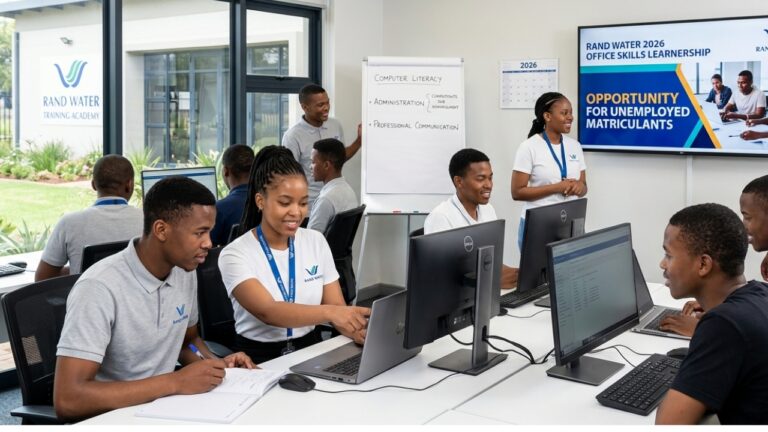
Rand Water’s 2026 Office Skills Learnership Could Be the Breakthrough Thousands of Unemployed Matriculants Need