New opportunities added daily · Always free to apply
New opportunities added daily · Always free to apply
LPWR 2026 Electrical Learnership Program
Posted 28 Nov 2025
Are you passionate about electrical engineering and eager to build a professional career in this field? The LPWR 2026 Electrical Learnership Program offers an exceptional opportunity for young South Africans to gain valuable skills and practical experience while receiving financial support. This government-accredited learnership aims to empower unemployed youth and recent graduates with the technical expertise needed to thrive in the electrical sector.
In this comprehensive guide, you will discover what the LPWR Electrical Learnership Programme is, its benefits, eligibility criteria, application process, and important frequently asked questions (FAQs) to help you make informed decisions as you start your journey toward a career in electrical engineering.
The LPWR Electrical Learnership Programme is an accredited skills development initiative designed to bridge the gap between theoretical knowledge and practical skills in the electrical engineering industry. It is intended for unemployed young South Africans and matriculants who want to acquire hands-on experience and formal certification.
Learnerships combine structured classroom learning with real-world work experience, providing participants with the chance to apply what they learn in a professional environment. This approach not only builds confidence but also enhances employability, making learners competitive in South Africa’s growing electrical industry.
The 2026 program includes a monthly stipend of R3,500, helping participants to manage living expenses while they develop their skills over 12 to 18 months.
Electrical engineering is an essential and rapidly expanding sector, playing a crucial role in infrastructure development, renewable energy projects, telecommunications, and more. By joining an electrical learnership, you gain:
Overall, this learnership is an excellent way to start a professional career in a skilled trade while being supported financially.
To apply for the LPWR Electrical Learnership Programme, applicants must meet the following requirements:
Applicants who show dedication, reliability, and a genuine desire to learn stand a better chance of being accepted into this competitive program.
The LPWR Electrical Learnership is carefully structured to provide a balance of theory and practice. Over 12 to 18 months, participants receive formal training and gain practical experience on real projects.
Throughout the learnership, learners undergo evaluations through written tests, practical assessments, and assignments. On successful completion, participants receive a nationally recognized certification which significantly boosts their employability in the electrical sector.

Applying for the LPWR Electrical Learnership is a straightforward process, but preparation is key.
Completing the LPWR Electrical Learnership opens doors to various career paths within the electrical and engineering industries, such as:
Additionally, graduates can pursue further education through diplomas, apprenticeships, or specialized certifications to advance their careers.
The program typically lasts between 12 and 18 months, combining classroom learning with practical workplace experience.
No, the program is fully funded. Participants receive a monthly stipend of R3,500 and do not pay tuition fees.
No prior experience is required. However, a strong interest in electrical engineering and a willingness to learn are essential.
Most learnerships require a Matric or equivalent qualification. Some may consider applicants with relevant experience or alternative qualifications, but it is best to check specific requirements during application.
The monthly stipend is usually paid via bank transfer or another agreed payment method.
Yes, you will be awarded a nationally recognized qualification upon successful completion.
While many graduates find employment due to their skills and certification, job placement is not guaranteed.
Training is typically conducted at LPWR facilities or partner institutions, with practical work experience assigned at partner workplaces.
You may be given opportunities to retake assessments or undergo extra training, depending on the program’s policies.
Applications can be submitted online via the LPWR website or handed in at LPWR offices along with all required documents.
The LPWR 2026 Electrical Learnership Programme represents a valuable gateway for young South Africans to enter the electrical engineering field. It offers a rare combination of financial support, formal training, and practical experience — all critical for building a successful career.
If you are motivated, dedicated, and eager to learn, this learnership can help you gain the skills and qualifications necessary to thrive in a growing industry. Don’t miss this opportunity—prepare your documents, apply early, and take the first step toward a rewarding future in electrical engineering.

Grade 12 and Unemployed? BUCO's New 2026 Learnership Offers Paid Retail Training and Real Workplace Experience
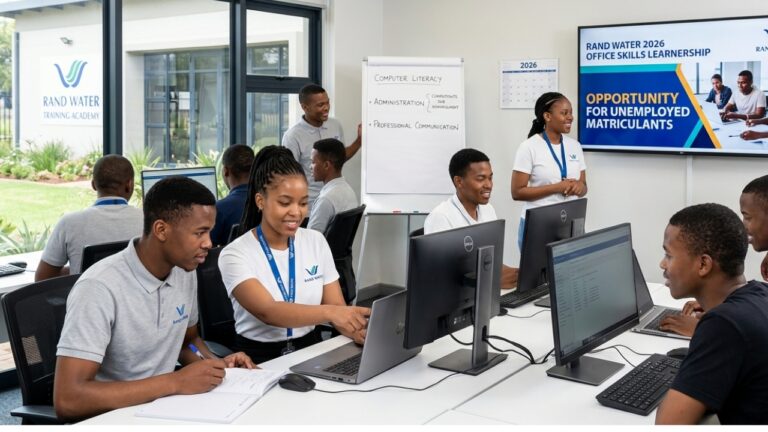
Rand Water’s 2026 Office Skills Learnership Could Be the Breakthrough Thousands of Unemployed Matriculants Need