New opportunities added daily · Always free to apply
New opportunities added daily · Always free to apply
Workforce Development Courses 2025
Posted 12 Nov 2025
In today’s rapidly evolving job market, acquiring relevant skills and experience is more critical than ever. Workforce learnerships have emerged as a powerful tool to bridge the gap between education and employment, providing individuals with structured training, practical work experience, and nationally recognized qualifications. Whether you are a recent school leaver, a graduate, or someone looking to switch careers, learnerships can offer you an effective pathway to a rewarding career. Workforce Development Courses 2025
This comprehensive guide will explore what workforce learnerships are, their benefits, how to apply, and what you need to know to succeed in 2025 and beyond.
A learnership is a structured, work-based learning program that combines theoretical training with practical workplace experience. It is designed to develop skills in a specific occupational field. Learnerships are typically registered with the relevant Sector Education and Training Authority (SETA) in South Africa or an equivalent body in other countries.
The key feature of a learnership is that it leads to a nationally recognized qualification upon successful completion. This means learners not only gain valuable work experience but also earn a formal certification that boosts their employability.
Learnerships usually last between 12 to 24 months and involve three components:
The blend of learning and work prepares learners to enter the job market with confidence, equipped with both knowledge and hands-on experience.
Learnerships focus on equipping learners with industry-relevant skills that meet the current demands of the workforce. This increases your chances of finding sustainable employment.
Completing a learnership awards you a qualification registered on the National Qualifications Framework (NQF), providing credibility to your skills and experience.
Many employers prefer hiring candidates who have completed learnerships because they come with practical experience and proven skills. Some learnerships even lead to permanent employment with the host company.
Most learnerships offer learners a monthly stipend or salary during their training period, helping to support them financially.
Learnerships open doors to career progression by providing clear pathways to higher qualifications or further learning opportunities.
Learnerships are available to a wide range of people, including:
Each learnership program may have specific entry requirements, such as a minimum education level, age limit, or basic literacy and numeracy skills.

Finding the right learnership can be a challenge, but these tips will help you get started:
SETA websites list available learnership opportunities by sector, such as finance, engineering, hospitality, or IT.
Many governments provide centralized job portals or skills development websites with learnership listings.
Accredited training providers and colleges often advertise learnerships and assist with applications.
Some companies run their own learnership programs and accept direct applications.
Have a CV, certified copies of your ID and qualifications, and a motivation letter ready when applying.
When you start your learnership, you will typically go through an induction process to familiarize you with the training schedule, workplace rules, and assessment criteria.
Throughout the learnership, you will balance theory and practical tasks. It’s essential to be proactive, ask questions, and show eagerness to learn. Your progress will be regularly assessed through tests, assignments, and practical evaluations.
Successful completion requires commitment, attendance, and meeting the required competency standards.
This is a common question many job seekers ask. While both learnerships and internships provide work experience, they are different in important ways:
| Aspect | Learnership | Internship |
|---|---|---|
| Purpose | Formal training leading to a qualification | Gaining work experience, often short-term |
| Duration | Usually 12-24 months | Usually a few weeks to a few months |
| Qualification | Results in a nationally recognized qualification | No formal qualification awarded |
| Structure | Combines classroom learning with workplace experience | Primarily workplace experience |
| Funding | Often includes a stipend/salary and is funded by SETAs or government | May be unpaid or paid, depending on the employer |
| Assessment | Includes formal assessments and evaluations | May not include formal assessments |
| Outcome | Improves long-term employability with certification | Provides practical experience, often exploratory |
In summary, a learnership is a more formal, structured program that offers certification, while an internship is usually shorter and focused primarily on gaining practical work exposure.
Learnerships are available across various industries, including:
Each sector offers specific programs tailored to equip learners with the necessary skills for that industry.
Completing a learnership doesn’t just mean earning a certificate; it’s your stepping stone to a brighter career. Here are some next steps:
Answer: A learnership is a structured program combining formal learning and workplace experience that leads to a nationally recognized qualification. It usually lasts between 12 to 24 months and includes formal assessments. An internship is typically a short-term opportunity focused mainly on gaining practical work experience and does not result in a formal qualification.
Answer: Most learnerships provide learners with a monthly stipend or salary to help support their training period. The amount varies depending on the sector and employer.
Answer: Some learnerships accept applicants without a matric certificate, especially at entry-level. However, many require a minimum education level. It’s important to check the specific entry requirements of each learnership.
Answer: You can find accredited providers through Sector Education and Training Authorities (SETAs) websites, government skills development portals, or official training institutions.
Answer: While many learnerships improve your employability and some lead directly to job placements, they do not guarantee employment. Success depends on your performance and the job market demand.
Answer: Yes, employees can enroll in learnerships to upgrade their skills and qualifications while working.
Answer: Most learnerships last between 12 to 24 months, depending on the complexity of the qualification and sector.
Answer: Learnerships registered on the National Qualifications Framework (NQF) are nationally recognized. Some qualifications may have international equivalency, but this depends on the country and sector.
Workforce learnerships offer a practical, effective way to gain skills, experience, and recognized qualifications to unlock your career potential. Whether you are starting your career or looking to improve your skillset, learnerships provide structured opportunities to prepare you for the job market.
If you want to improve your chances of employment and develop skills relevant to today’s economy, consider applying for a learnership today. Stay proactive, committed, and open to learning, and you will be well on your way to a successful career.

Grade 12 and Unemployed? BUCO's New 2026 Learnership Offers Paid Retail Training and Real Workplace Experience
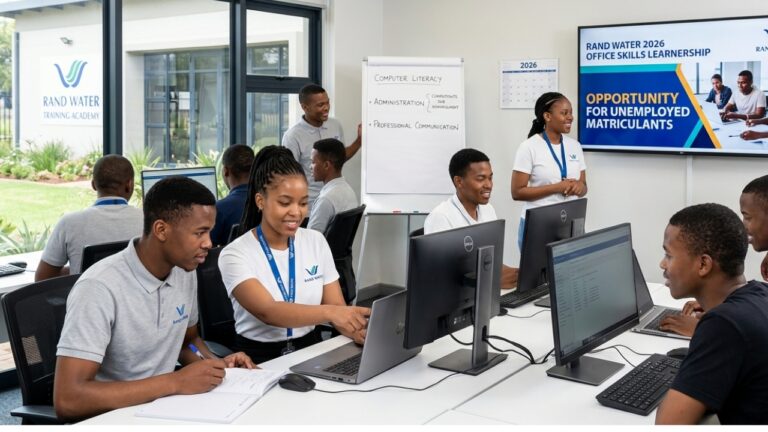
Rand Water’s 2026 Office Skills Learnership Could Be the Breakthrough Thousands of Unemployed Matriculants Need