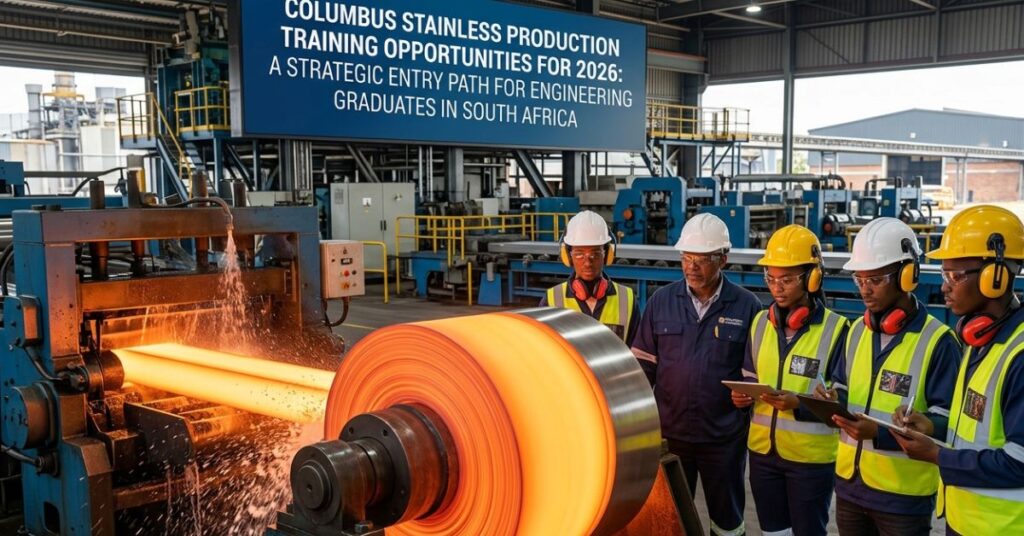
The Columbus Stainless Production Training Opportunities for 2026 present a high-value pathway for South African graduates seeking structured, real-world experience in heavy industry. Offered by Columbus Stainless, this programme is tailored for candidates with National Diploma or BEng Tech qualifications in Engineering and Business Operations. CSP Training Opportunities for 2026
At a time when many graduates struggle to secure industry-aligned experience, this programme bridges the gap between academic knowledge and practical workplace application. Based in Middelburg, the training provides direct exposure to stainless steel production systems within one of Africa’s leading manufacturing environments.
Programme Overview: CSP Training Opportunities for 2026
- Reference Number: PRODTR2026
- Location: Middelburg, Mpumalanga
- Closing Date: 30 April 2026
- Start Date: 1 July 2026
- Contract Type: Graduate Training Programme
- Work Level: Student / Graduate
- Salary: Market-related training allowance
- Application Method: Online via company portal
The programme is structured to provide immersive, hands-on experience across multiple departments within a large-scale industrial production facility.
Fields Eligible for CSP Training Opportunities for 2026
Metallurgical Engineering
Graduates in Metallurgical Engineering are central to stainless steel production. Their responsibilities often include:
- Steelmaking process optimisation
- Materials science and alloy behaviour analysis
- Heat treatment processes
- Corrosion resistance evaluation
- Laboratory-based quality control testing
Metallurgical specialists work closely with production and research teams to ensure consistent product quality and efficiency.
Related Opportunities 2026
• Funding Bursaries
• Youth Opportunities
• Internship Programme
• Learnership Programme
• Online Courses
Mechanical Engineering
Mechanical Engineering graduates contribute significantly to maintaining operational efficiency. Typical responsibilities include:
- Maintenance of plant machinery and rolling mill systems
- Management of hydraulic and rotating equipment
- Predictive maintenance strategies
- Shutdown planning and coordination
Mechanical engineers ensure the reliability and longevity of complex industrial systems.
Instrumentation
Instrumentation graduates are critical in modern automated production environments. Their work involves:
- Process automation systems
- Sensors and measurement devices
- PLC (Programmable Logic Controller) systems
- Troubleshooting control logic
With increasing digitalisation, instrumentation specialists are in high demand across manufacturing sectors.
Business Operations
Business Operations graduates support the production environment through coordination and optimisation. Responsibilities include:
- Production planning and workflow management
- Supply chain alignment
- Performance monitoring and reporting
- Resource allocation
This role ensures that technical processes are aligned with operational and business goals.
What You Will Gain from CSP Training Opportunities for 2026
Practical Industry Exposure
Participants gain direct access to real industrial systems, including:
- Stainless steel production processes
- Maintenance planning cycles
- Engineering problem-solving environments
- Workplace safety systems
- Production reporting tools
Skills Development
Graduates develop critical workplace competencies such as:
- Technical troubleshooting
- Process optimisation
- Team-based collaboration
- Industrial safety awareness
- Data-driven decision-making
Employability Advantage
One of the most significant benefits is credible industry experience. Employers in engineering and manufacturing sectors consistently prioritise candidates with hands-on exposure.
Graduates who complete structured training programmes like this often transition more quickly into permanent roles compared to those without practical experience.
Minimum Requirements for Columbus Stainless Production Training Opportunities for 2026
Applicants must meet the following criteria:
Educational Requirements
- National Diploma or BEng Tech in:
- Metallurgical Engineering
- Mechanical Engineering
- Instrumentation
- Business Operations
Required Documents
Ensure all documents are prepared and certified:
- Certified copy of ID (front and back)
- Full academic transcript
- Qualification certificate or completion letter
- Matric certificate
- Updated CV
Incomplete applications will not be considered.
Strengthening Your Application
To stand out in the Columbus Stainless Production Training Opportunities for 2026, your CV should clearly demonstrate:
- Final-year projects or research topics
- Exposure to engineering software
- Practical training or workshop experience
- Understanding of workplace safety
- Leadership or teamwork experience
- Internship exposure (if available)
Employers value initiative, curiosity, and a proactive approach to learning.
How to Apply for CSP Training Opportunities for 2026
Follow these steps:
- Visit the official Columbus Stainless recruitment portal
- Register your profile
- Upload all required supporting documents
- Submit your application under:
“Training Opportunity – Production 2026”
Early application is strongly recommended due to high competition.
What Happens After You Apply?
After the closing date:
- Shortlisted candidates may be contacted within approximately six weeks
- If you do not receive feedback within this period, consider your application unsuccessful
Applicants are encouraged to continue applying for similar opportunities across the engineering sector.
CSP Training Opportunities for 2026: Expert Advice for Graduates
Graduates should approach production training programmes as long-term career investments rather than temporary placements.
Key Tips:
- Build a strong, technically focused CV
- Highlight practical and project-based learning
- Demonstrate understanding of industrial environments
- Show awareness of safety protocols
- Apply to multiple programmes simultaneously
Early exposure to industrial systems significantly improves long-term career stability and growth potential.
Industry Context: Why This Programme Matters
South Africa’s manufacturing sector continues to demand technically skilled graduates who can operate within complex production environments. However, a major barrier remains the lack of structured workplace training.
Programmes like the Columbus Stainless Production Training Opportunities for 2026 address this gap by:
- Providing industry-relevant experience
- Enhancing technical competency
- Improving employability in competitive job markets
For graduates entering fields such as metallurgy, mechanical systems, and automation, this type of training is increasingly essential.
Frequently Asked Questions (FAQ)
1. Is the Columbus Stainless Production Training Opportunities for 2026 open to current students?
No. Applicants must have completed their qualification or provide a completion letter at the time of application.
2. Is prior work experience required?
No. This is an entry-level graduate training programme designed for individuals without formal work experience.
3. Do participants receive a salary?
Yes. A market-related training allowance is provided.
4. Can applicants from outside Mpumalanga apply?
Yes. The programme is open to candidates across South Africa. However, successful applicants must relocate to Middelburg.
5. Is this a permanent job?
No. This is a structured training opportunity. However, it significantly improves future employment prospects.
Final Thoughts on CSP Training Opportunities for 2026
The Columbus Stainless Production Training Opportunities for 2026 stand out as a high-impact opportunity for engineering and business graduates seeking meaningful entry into South Africa’s industrial sector.
With structured exposure, practical training, and access to real production systems, participants gain a competitive advantage that extends well beyond the duration of the programme.
Graduates who act early, prepare strong applications, and actively pursue similar opportunities position themselves for long-term success in engineering and manufacturing careers.

Thato Sabethwa is a passionate education advocate and digital content creator dedicated to helping young South Africans access valuable career and learning opportunities. With a strong belief in the power of skills development, Thato writes informative articles about learnerships, internships, bursaries, and job readiness. Through OnlineLearnership.co.za, Thato aims to guide students and job seekers toward the right opportunities that can shape their future. Her content focuses on practical advice, career tips, and reliable updates to empower readers to make informed decisions about their education and career paths.