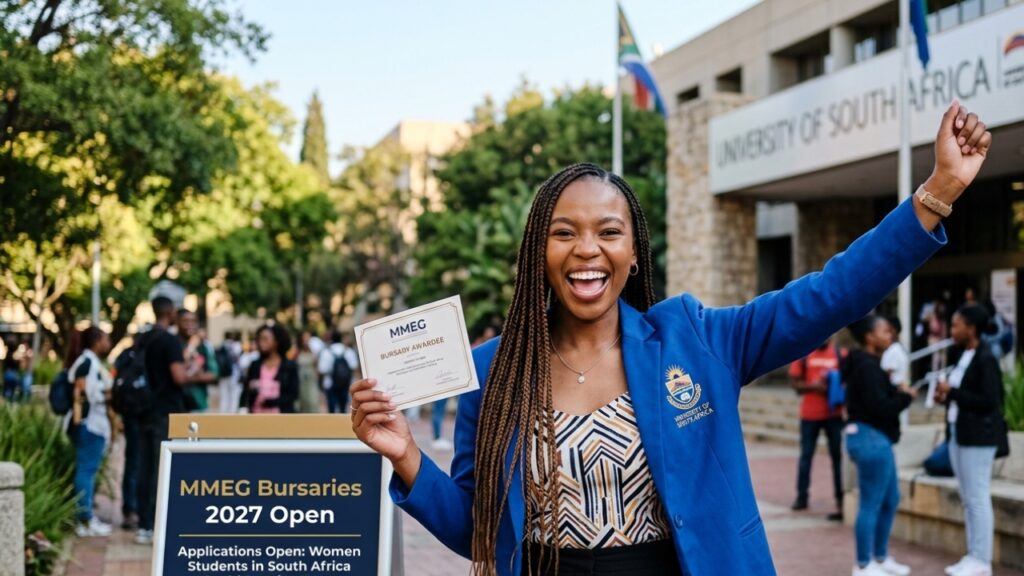
Women pursuing higher education in South Africa now have another opportunity to secure financial support for their studies through the MMEG Bursaries 2027 programme. The funding initiative, offered by the Margaret McNamara Education Grants (MMEG), is designed to support women from developing and middle-income countries who are committed to improving the lives of women and children through education. MMEG Bursaries 2027 South Africa
For many students, financial support can mean more than simply paying tuition fees. It can reduce household pressure, support childcare responsibilities, cover transport and living costs, and allow students to focus fully on completing their qualifications. The MMEG bursary programme aims to help women who are not only academically driven but also committed to creating positive social impact in their communities.
The South Africa application window officially opened on 15 May 2026 and closes on 14 September 2026 at 11:59 PM Eastern Standard Time. Eligible applicants who are already registered at approved universities can now begin preparing and submitting their applications online.
What Is the MMEG Bursary Programme 2027?
The MMEG bursary programme is an international education funding initiative that supports women pursuing higher education. Unlike many traditional bursaries that focus only on academic performance, MMEG places strong emphasis on leadership potential, community involvement, and long-term impact.
The programme specifically seeks women whose educational goals align with improving opportunities and living conditions for women and children. This community-focused approach makes the bursary particularly valuable for students who see education as a tool for broader social development.
MMEG funding is available to women studying across different academic levels and fields. The programme supports applicants who demonstrate financial need, commitment to education, and a clear vision for how their qualifications can contribute to society after graduation.
How Much Funding Can Successful Applicants Receive?
Successful applicants in the South Africa programme may receive funding worth approximately R115,000.
However, applicants should understand that the exact amount is not guaranteed. According to MMEG, final grant values may vary depending on exchange rates, available funding, and individual circumstances.
Even so, the bursary remains one of the more substantial funding opportunities available to women students in South Africa, especially because it can cover a wide range of study-related expenses beyond tuition alone.
Related Opportunities 2026
• Funding Bursaries
• Youth Opportunities
• Internship Programme
• Learnership Programme
• Online Courses
What Expenses Can the MMEG Grant Cover?
One of the major advantages of the MMEG bursary programme is its flexibility. The grant can assist students with several essential academic and living costs connected to their studies.
Eligible expenses may include:
- Tuition and academic fees
- Books and learning materials
- Accommodation and living expenses
- Transport and travel costs
- Research and fieldwork expenses
- Childcare support
- Educational supplies and equipment
This broader support structure can make a significant difference for students balancing academics with family responsibilities or financial hardship.
However, applicants should note that MMEG does not allow the grant to be used for overdue or outstanding fees from previous academic periods.
Who Can Apply for the MMEG Bursaries 2027?
The programme has several eligibility requirements that applicants must meet before submitting an application.
To qualify, applicants must:
- Identify as a woman
- Be at least 25 years old by the application deadline
- Be a national of an eligible developing or middle-income country
- Be registered at an accredited in-person academic institution
- Remain enrolled for at least one full academic term after receiving the grant
- Plan to complete their qualification within three years of receiving funding
- Have no direct relationship with certain organizations linked to the programme, including the World Bank Group, IMF, Inter-American Development Bank, or MMEG Board members
Importantly, applicants for the South African programme must already be enrolled at an approved university. Both full-time and part-time students may apply, but part-time students must be registered for at least two courses per semester or term.
Which Qualifications Are Supported?
The bursary programme supports women studying at different academic levels.
Funding applications are accepted for:
- Certificate programmes
- Undergraduate qualifications
- Postgraduate degrees
- Graduate studies
- Postdoctoral research
The programme is also open to students from various academic disciplines, meaning applicants are not limited to a specific field of study.
Whether a student is studying education, law, engineering, public health, social sciences, business, agriculture, or another field, they may still qualify if they meet the programme requirements.
Approved South African Universities
Applicants must already be studying at an approved university under the MMEG South Africa programme.
Some of the recognised institutions include:
- University of Cape Town
- University of Johannesburg
- University of Pretoria
- University of Limpopo
- University of KwaZulu-Natal
- University of the Witwatersrand
- Stellenbosch University
- University of Venda
- Tshwane University of Technology
- Walter Sisulu University
Applicants are strongly encouraged to verify the latest approved university list before applying, since eligibility depends on both the institution and the registered programme.
Required Documents for the Application
Preparing documents early is one of the most important steps in completing a successful bursary application.
Applicants may need to submit the following:
- Certified copy of ID or passport
- Study visa or permit, where applicable
- Proof of university registration
- Academic transcripts and latest results
- Financial information
- Personal motivation statement
- Thesis or research summary for postgraduate students
- Two reference letters
Incomplete applications are typically disqualified, which is why applicants should avoid leaving uploads or document preparation until the final days before the deadline.
Why the Motivation Letter Matters
The motivation section is one of the most critical parts of the application process.
This is where applicants explain:
- Their educational journey
- Financial circumstances
- Career ambitions
- Community involvement
- Future goals
- The impact they hope to make after graduating
A strong motivation letter usually combines personal experience with a clear sense of purpose. Instead of only discussing financial struggles, applicants should demonstrate how their education connects to broader social impact.
For example, a public health student may explain how they hope to improve maternal healthcare access in underserved communities. An education student may discuss plans to improve literacy among girls in rural areas. A law student might focus on gender justice or child protection.
MMEG also warns applicants against submitting AI-generated essays. Applications that appear dishonest or overly generic may be rejected during the review process.
The strongest applications are usually authentic, specific, and personal.
How Competitive Is the Selection Process?
The MMEG bursary programme is highly competitive because it attracts applicants from multiple countries and academic backgrounds.
After applications close, the organisation reviews all submissions and shortlists semi-finalists for interviews. Only shortlisted candidates are contacted during this stage.
Selection decisions are based on several factors, including:
- Academic progress
- Leadership potential
- Financial need
- Community involvement
- Quality of the motivation statement
- Long-term social impact goals
Applicants should therefore focus on submitting polished, carefully reviewed applications that clearly communicate their purpose and eligibility.
Important Deadline Information
The closing date for applications is:
14 September 2026 at 11:59 PM Eastern Standard Time
Because South Africa operates in a different time zone, applicants should avoid waiting until the final day to submit documents.
Technical issues, incomplete uploads, internet problems, or missing documents can easily result in disqualification if applications are rushed at the last minute.
Submitting early gives applicants enough time to review information, correct errors, and ensure all required documents are properly uploaded.
How to Apply for the MMEG Bursaries 2027
Applications must be submitted online through the official MMEG application portal.
Applicants should ensure they:
- Select the correct South Africa programme
- Complete all required sections
- Upload every supporting document
- Review all information carefully before submission
- Submit before the deadline
Because the application process involves multiple sections and supporting documents, early preparation is highly recommended.
Why Programmes Like MMEG Matter in South Africa
The cost of higher education continues to place pressure on many South African students, especially women balancing studies with family responsibilities, childcare, transport costs, and limited financial support.
Funding initiatives like MMEG help close some of these gaps by supporting women who are working toward long-term educational and social impact goals.
The programme also reflects a growing global focus on empowering women through education, leadership, and economic participation. Research consistently shows that investing in women’s education contributes to stronger families, improved child wellbeing, and broader economic development.
For many recipients, bursary programmes do not only change academic outcomes — they can reshape career opportunities, financial stability, and community impact for years to come.
Tips for a Strong Application
Applicants who want to improve their chances of success should consider the following:
Start Early
Gathering documents, requesting references, and preparing a strong motivation statement takes time.
Be Honest and Specific
Avoid generic answers. Explain your real experiences, goals, and challenges clearly.
Focus on Community Impact
MMEG values applicants who want to use education to improve the lives of others.
Double-Check Documents
Missing files or incorrect uploads can lead to automatic disqualification.
Write in Your Own Voice
Authenticity matters. Personal stories and genuine motivation are often more powerful than overly formal or artificial writing.
Frequently Asked Questions (FAQ)
What is the MMEG Bursary 2027?
The MMEG Bursary 2027 is a funding programme that supports women from developing and middle-income countries who are pursuing higher education and aim to improve the lives of women and children.
How much funding does MMEG provide?
Successful applicants in South Africa may receive funding of approximately R115,000, although final amounts may vary.
Who can apply for the MMEG bursary?
Women aged 25 or older who are already registered at approved universities and meet the programme requirements may apply.
Can part-time students apply?
Yes. Part-time students may apply if they are taking at least two courses per semester or term.
Which universities are eligible?
Several South African universities are approved under the programme, including the University of Cape Town, University of Johannesburg, University of Pretoria, and others.
What documents are required?
Applicants may need identification documents, proof of registration, academic records, financial information, reference letters, and a motivation statement.
Can the bursary pay outstanding fees?
No. MMEG states that the grant cannot be used for past-due or overdue fees.
When is the application deadline?
Applications close on 14 September 2026 at 11:59 PM Eastern Standard Time.
How are successful applicants selected?
Applicants are assessed based on academic progress, financial need, leadership potential, motivation, and commitment to community impact.
Final Thoughts
The MMEG Bursaries 2027 programme offers more than financial assistance. It provides women students with an opportunity to continue their education while strengthening their ability to contribute meaningfully to society.
With funding that can help cover both academic and living expenses, the programme may significantly reduce the financial burden many students face during their studies.
Women who meet the eligibility requirements are encouraged to begin preparing their applications early, carefully review all requirements, and submit complete applications well before the deadline.
Disclaimer
This article is intended for informational purposes only. Applicants should always verify official bursary requirements, deadlines, eligibility criteria, and application procedures directly through the official Margaret McNamara Education Grants website before submitting an application. Funding amounts, approved institutions, and programme details may change at the discretion of the organisation.

Thato Sabethwa is a passionate education advocate and digital content creator dedicated to helping young South Africans access valuable career and learning opportunities. With a strong belief in the power of skills development, Thato writes informative articles about learnerships, internships, bursaries, and job readiness. Through OnlineLearnership.co.za, Thato aims to guide students and job seekers toward the right opportunities that can shape their future. Her content focuses on practical advice, career tips, and reliable updates to empower readers to make informed decisions about their education and career paths.