Introduction: A Major Opportunity for Future Artisans in South Africa
The demand for skilled artisans in South Africa continues to grow as industries such as manufacturing, engineering, mining, and infrastructure development expand. In response to this skills shortage, structured apprenticeship programmes have become a critical entry point for young people seeking stable and long-term careers in technical fields.
One such opportunity is the Wilmar Fitter Apprenticeship 2026, a four-year structured training programme designed to develop qualified fitters through a combination of institutional learning and hands-on workplace experience. The programme not only provides technical training but also supports apprentices financially through a monthly stipend and essential work resources.
For candidates with a strong interest in mechanical systems, engineering tools, and practical problem-solving, this apprenticeship represents a direct pathway into a recognized artisan trade qualification.
What Is the Wilmar Fitter Apprenticeship 2026?
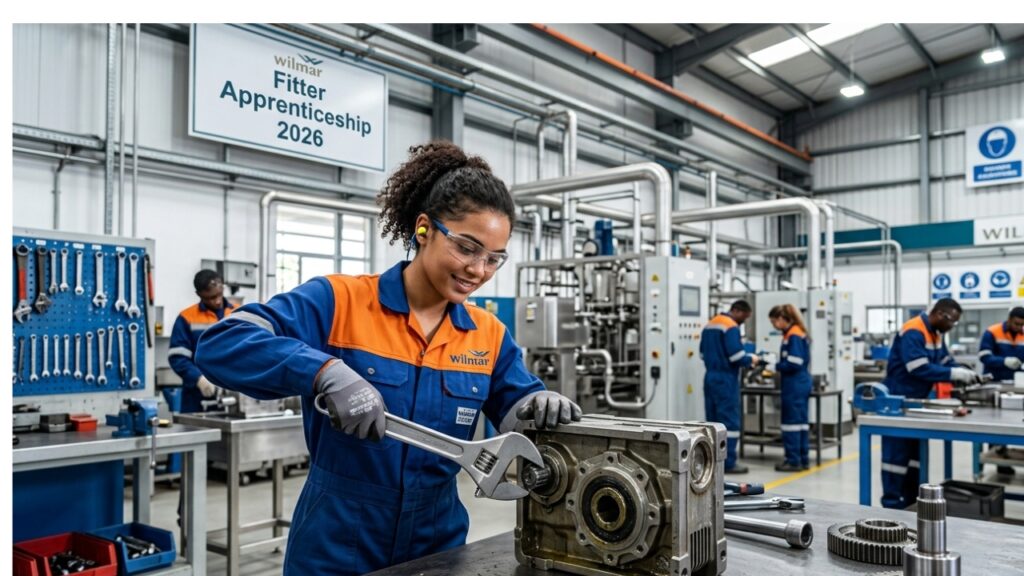
The Wilmar Fitter Apprenticeship 2026 is a structured artisan development programme focused on training individuals to become qualified fitters. Over a period of four years, selected candidates will undergo both theoretical instruction and practical workplace training.
The programme is designed to ensure that apprentices gain competency in mechanical fitting, machine maintenance, technical drawings, measurement systems, and workplace safety procedures.
A key focus of the training is Occupational Health and Safety (OHS), ensuring that apprentices are not only technically competent but also capable of working safely in industrial environments.
By the end of the programme, successful candidates are expected to achieve a recognized Fitter trade qualification, opening doors to employment in various engineering and industrial sectors.
Related Opportunities 2026
• Funding Bursaries
• Youth Opportunities
• Internship Programme
• Learnership Programme
• Online Courses
Why This Apprenticeship Matters
South Africa continues to face a shortage of qualified artisans, particularly in technical trades such as fitting and machining. This shortage affects productivity across industries and limits economic growth.
The Wilmar apprenticeship addresses this gap by:
- Providing structured technical training
- Offering real workplace exposure
- Supporting apprentices financially during training
- Developing job-ready skills aligned with industry standards
For many young South Africans, especially those from disadvantaged backgrounds, such programmes are often the most accessible route into skilled employment.
Who Should Apply for the Wilmar Fitter Apprenticeship?
This apprenticeship is primarily aimed at South African citizens who are serious about building a career in technical and engineering fields.
Ideal candidates are individuals who:
- Have completed Matric (Senior Certificate)
- Hold an N3 Engineering Studies qualification
- Are interested in mechanical systems and technical work
- Are committed to completing a long-term training programme
- Can work in structured, safety-focused environments
The programme also supports employment equity objectives, prioritizing applicants from previously disadvantaged backgrounds.
Matric Requirements for Applicants
Applicants must meet specific academic requirements to be considered.
Minimum Matric Requirements:
- English: Minimum 50% pass
- Mathematics: Minimum 40% pass
- Mathematical Literacy is not accepted
Applicants must ensure their academic records clearly reflect these results. Incomplete or unclear documentation may reduce chances of selection.
N3 Engineering Studies Requirements
In addition to Matric, candidates must hold a National N3 Certificate in Engineering Studies.
Required N3 Subjects Include:
- Mathematics (minimum 50%)
- Engineering Science (minimum 50%)
- Occupational Health and Safety
- Fitting and Machining or related trade theory subjects
- Engineering Drawing or Technical Drawings
These subjects are essential because they provide foundational knowledge required in fitting and mechanical trades.
The apprenticeship relies heavily on technical understanding, meaning candidates must already have exposure to engineering concepts before entering the programme.
Why N3 Engineering Studies Are Important
The N3 qualification serves as proof that a candidate has the theoretical grounding required for artisan training. Fitters work with mechanical systems, machinery, measurements, and technical drawings, all of which require strong mathematical and scientific understanding.
Candidates with N3 qualifications demonstrate:
- Ability to understand engineering principles
- Familiarity with workshop environments
- Basic problem-solving skills in technical contexts
- Awareness of safety standards in industrial settings
For this reason, applicants are strongly encouraged to highlight their N3 subjects clearly in their CVs.
What the Apprenticeship Offers: Stipend and Benefits
One of the most attractive aspects of the Wilmar Fitter Apprenticeship 2026 is the financial and training support provided to apprentices.
Programme Benefits Include:
- Monthly stipend of R4,434
- Additional competency-based stipend adjustments over time
- Full coverage of institutional training costs
- Provision of a personal toolkit
- Supply of Personal Protective Equipment (PPE)
- Meal support during training or work sessions
This support structure ensures that apprentices can focus entirely on their training without financial pressure or lack of resources.
Training Structure: What Apprentices Will Learn
The programme is designed to combine classroom-based learning with hands-on workplace experience.
Key Training Areas:
- Mechanical fitting and assembly
- Tool handling and maintenance
- Machine operation and servicing
- Technical drawing interpretation
- Measurement and precision work
- Equipment care and workshop discipline
- Safety procedures and compliance
- Problem-solving in engineering environments
- Communication and teamwork in the workplace
Over the four-year period, apprentices gradually transition from foundational learning to advanced trade competence.
Skills Developed During the Programme
By the end of the apprenticeship, participants are expected to develop a strong set of technical and workplace skills, including:
- Mechanical and engineering knowledge
- Practical workshop experience
- Strong attention to detail
- Ability to follow safety protocols
- Confidence in using industrial tools
- Technical drawing interpretation
- Team collaboration skills
- Effective communication in a workplace environment
These skills are highly valued across industries and can lead to long-term employment opportunities.
Required Documents for Application
Applicants must prepare a complete application package before submitting.
Required Documents:
- Updated Curriculum Vitae (CV)
- Certified copy of ID document
- Certified Matric certificate
- Certified academic transcript or statement of results
- Certified N3 Engineering Studies certificate
All documents must be clear, valid, and certified. Applications with missing or unclear documents may be disqualified.
CV Tip:
Applicants should clearly list their Matric and N3 subjects at the top of their CV to ensure recruiters can quickly confirm eligibility.
How to Apply for the Wilmar Fitter Apprenticeship 2026
Applications must be submitted through the official online application system.
Application Steps:
- Prepare all required certified documents
- Update and refine your CV
- Ensure academic results are clearly visible
- Complete the online application form
- Upload all supporting documents
- Submit before the closing date
Applicants are encouraged to apply early to avoid last-minute technical issues or delays in document preparation.
Selection and Screening Process
Shortlisted candidates may undergo a structured selection process, which can include:
- Medical fitness assessments
- Criminal background checks
- Verification of qualifications
- Reference checks
These steps are standard in technical industries to ensure safety, reliability, and compliance with workplace requirements.
Application Deadline
The closing date for applications is:
19 August 2026
Late applications are typically not accepted. Candidates should avoid waiting until the final day, as document preparation and system delays can affect submission.
What Happens If You Are Not Selected?
Applicants who do not receive feedback within two weeks after the closing date should consider their application unsuccessful.
However, candidates are encouraged to continue applying for other apprenticeship opportunities, as artisan training programmes are competitive and limited in availability.
Career Value of the Wilmar Fitter Apprenticeship
This apprenticeship is more than just short-term training. It offers a structured career pathway into one of the most in-demand technical trades.
Successful completion can lead to careers in:
- Manufacturing plants
- Engineering companies
- Mining operations
- Maintenance departments
- Industrial production facilities
Qualified fitters are essential in keeping machinery and systems operational, making this a highly valuable and stable profession.
Tips for a Strong Application
To improve your chances of selection:
- Highlight technical subjects clearly in your CV
- Ensure all documents are certified and readable
- Include any workshop or technical exposure
- Emphasize safety awareness and discipline
- Keep your CV simple and professional
- Avoid missing or outdated information
Recruiters prioritize candidates who clearly meet technical requirements and present organized applications.
Frequently Asked Questions (FAQ)
1. What is the Wilmar Fitter Apprenticeship 2026?
It is a four-year training programme that develops learners into qualified fitters through classroom learning and workplace training.
2. Do I get paid during the apprenticeship?
Yes. Apprentices receive a monthly stipend of R4,434, with possible increases based on competency progression.
3. Can I apply without N3 Engineering Studies?
No. N3 Engineering Studies is a mandatory requirement for this apprenticeship.
4. Is Mathematical Literacy accepted?
No. Only Mathematics with a minimum of 40% is accepted.
5. When is the closing date?
The application closing date is 19 August 2026.
6. What qualification will I receive?
Successful candidates will earn a Fitter trade qualification upon completion.
Conclusion
The Wilmar Fitter Apprenticeship 2026 presents a valuable opportunity for aspiring artisans in South Africa to enter the engineering and manufacturing sectors. With structured training, financial support, and practical workplace experience, the programme is designed to produce skilled and job-ready fitters over a four-year period.
For eligible candidates with the required Matric and N3 Engineering Studies background, this apprenticeship can serve as a life-changing step toward a stable and rewarding technical career.
Professional Disclaimer
This article is intended for informational and educational purposes only. Applicants should always verify all details, requirements, and deadlines through the official Wilmar recruitment or apprenticeship channels before applying. The publisher is not responsible for changes to application criteria, selection processes, or programme availability.

Thato Sabethwa is a passionate education advocate and digital content creator dedicated to helping young South Africans access valuable career and learning opportunities. With a strong belief in the power of skills development, Thato writes informative articles about learnerships, internships, bursaries, and job readiness. Through OnlineLearnership.co.za, Thato aims to guide students and job seekers toward the right opportunities that can shape their future. Her content focuses on practical advice, career tips, and reliable updates to empower readers to make informed decisions about their education and career paths.