Introduction: A High-Impact Career Opportunity in South Africa
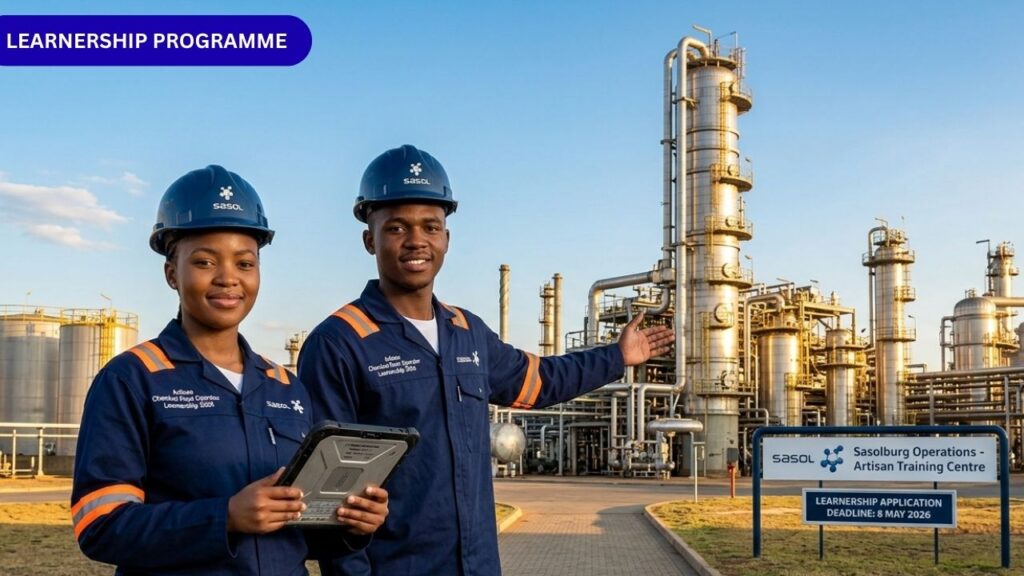
The Sasol Artisan Chemical Plant Operator Learnership Programme 2026 is now open for applications, offering a structured pathway into South Africa’s highly technical petrochemical industry. With operations based in Sasolburg and Secunda, this 36-month programme is designed for young South Africans who want more than just a qualification—they want real industry experience.
Unlike many learnerships that offer limited exposure, this programme combines formal training with hands-on plant experience, preparing candidates for long-term careers in energy, manufacturing, and chemical processing.
With the application deadline set for 8 May 2026, interested candidates are encouraged to apply early and ensure they meet all requirements.
Programme Overview
- Programme Name: Sasol Artisan Chemical Plant Operator Learnership Programme 2026
- Reference Number: 12032
- Location: Sasolburg and Secunda, South Africa
- Duration: 36 Months (Fixed-Term Contract)
- Company: Sasol Limited
- Minimum Qualification: Grade 12 (NSC) or N3 Certificate
This programme is focused on developing skilled Chemical Plant Operators, a critical role within industrial operations.
Related Opportunities 2026
• Funding Bursaries
• Youth Opportunities
• Internship Programme
• Learnership Programme
• Online Courses
Why This Learnership Matters in 2026
South Africa continues to face high youth unemployment, and many learnerships fail to translate into real career opportunities. The Sasol programme stands out because it is aligned with the needs of a highly regulated and skills-intensive industry.
The petrochemical sector requires precision, discipline, and technical competence. As a result, companies like Sasol invest heavily in structured training programmes that produce job-ready professionals.
By joining this learnership, you will:
- Gain real-world plant experience
- Receive formal, accredited training
- Be assessed against industry standards
- Build a foundation for long-term employment
This is not just a short-term opportunity—it is a strategic entry point into one of South Africa’s most important economic sectors.
What Is a Chemical Plant Operator Learnership?
A Chemical Plant Operator Learnership is a structured programme that integrates:
1. Workplace Training
You will work directly in plant environments, gaining hands-on experience with industrial systems and equipment.
2. Classroom Learning
Formal instruction covers theoretical knowledge, including chemical processes, safety standards, and operational procedures.
3. Assessments and Evaluation
Your performance will be continuously evaluated to ensure you meet industry competency standards.
Key Responsibilities During the Programme
As a learner, you will be expected to:
- Monitor and operate plant equipment
- Control production processes
- Ensure safety and compliance standards are met
- Record and report operational data
- Work under supervision in live industrial environments
This role requires focus, responsibility, and a strong commitment to safety.
Fields and Career Pathways
The programme prepares you for roles in:
- Petrochemical plants
- Oil and gas facilities
- Manufacturing plants
- Processing and refining operations
These industries are essential to South Africa’s economy and offer long-term career stability for skilled professionals.
Minimum Requirements
To qualify for the Sasol Learnership 2026, you must meet one of the following academic pathways:
Option 1: Grade 12 (National Senior Certificate)
You must have passed:
- Mathematics or Technical Mathematics
- English
- Physical Science or Technical Science
Option 2: N3 Certificate
You must have completed:
- Mathematics
- English
- Engineering Science
These requirements reflect the technical demands of chemical plant operations, where calculations, measurements, and process understanding are critical.
Core Components of the Programme
If selected, you will be required to:
- Participate fully in all training activities
- Complete assessments successfully
- Attend workplace readiness programmes
- Follow structured learning modules
- Work in real plant environments under supervision
This is an intensive programme designed to produce competent, industry-ready professionals.
Skills You Will Gain
Technical Skills
- Understanding chemical processes
- Operating and monitoring plant equipment
- Reading instruments and control systems
- Implementing safety protocols
Workplace Skills
- Communication in industrial environments
- Teamwork under pressure
- Problem-solving in real-time
- Following operational procedures
Professional Skills
- Time management
- Accountability
- Compliance with safety regulations
Required Documents for Application
To apply, you will need:
- Updated CV
- Certified copy of your ID
- Certified copies of qualifications
- Academic transcripts (if available)
Important Tips:
- Ensure documents are clear and readable
- Use recently certified copies
- Double-check that all names match across documents
Common Mistakes to Avoid
Many applicants miss out due to simple errors. Avoid the following:
- Applying without meeting subject requirements
- Submitting incomplete documents
- Using a generic, non-technical CV
- Missing the application deadline
Late applications will not be considered.
Application Deadline
Closing Date: 8 May 2026
Candidates are strongly encouraged to apply as early as possible to avoid last-minute issues.
Expert Tips to Improve Your Chances
To stand out in your application:
- Strengthen your Mathematics and Science knowledge
- Tailor your CV to highlight technical subjects
- Apply early and ensure all documents are complete
- Apply to multiple opportunities to increase your chances
Most importantly, approach this opportunity with a long-term mindset. This is not just a learnership—it is a career pathway.
What Happens After Completion?
While permanent employment is not guaranteed, completing the programme significantly improves your employability. Graduates often find opportunities in:
- Petrochemical companies
- Manufacturing firms
- Energy sector roles
The skills gained are transferable and in high demand.
APPLY FOR THE SASOL ARTISAN CHEMICAL PLANT OPERATOR LEARNERSHIP PROGRAMME 2026 INTAKE HERE
Frequently Asked Questions (FAQs)
Is the Sasol Learnership paid?
Yes, most Sasol learnerships include a monthly stipend, although the exact amount is not publicly disclosed.
Can I apply with Mathematical Literacy?
No. The programme requires Mathematics or Technical Mathematics.
Do I need prior work experience?
No previous work experience is required. Strong academic performance is sufficient.
Where will I be placed?
You will be assigned to either Sasolburg or Secunda, depending on operational needs.
Is permanent employment guaranteed?
No, but completing the programme significantly increases your chances of employment in the industry.
How long is the programme?
The learnership runs for 36 months.
What is the closing date?
The deadline for applications is 8 May 2026.
Final Thoughts
The Sasol Artisan Chemical Plant Operator Learnership Programme 2026 is one of the most structured and career-focused opportunities available to young South Africans today. With its combination of theoretical training and real-world experience, it offers a rare chance to enter a highly specialized and in-demand industry.
If you meet the requirements and are serious about building a technical career, this programme is worth your attention. Apply early, prepare thoroughly, and treat this as the beginning of a long-term professional journey.

Thato Sabethwa is a passionate education advocate and digital content creator dedicated to helping young South Africans access valuable career and learning opportunities. With a strong belief in the power of skills development, Thato writes informative articles about learnerships, internships, bursaries, and job readiness. Through OnlineLearnership.co.za, Thato aims to guide students and job seekers toward the right opportunities that can shape their future. Her content focuses on practical advice, career tips, and reliable updates to empower readers to make informed decisions about their education and career paths.